
Ultimate 5 Day Costa Brava Itinerary: The Best Beaches, Hidden Coves, & Medieval Villages on Spain’s Underrated Coastline
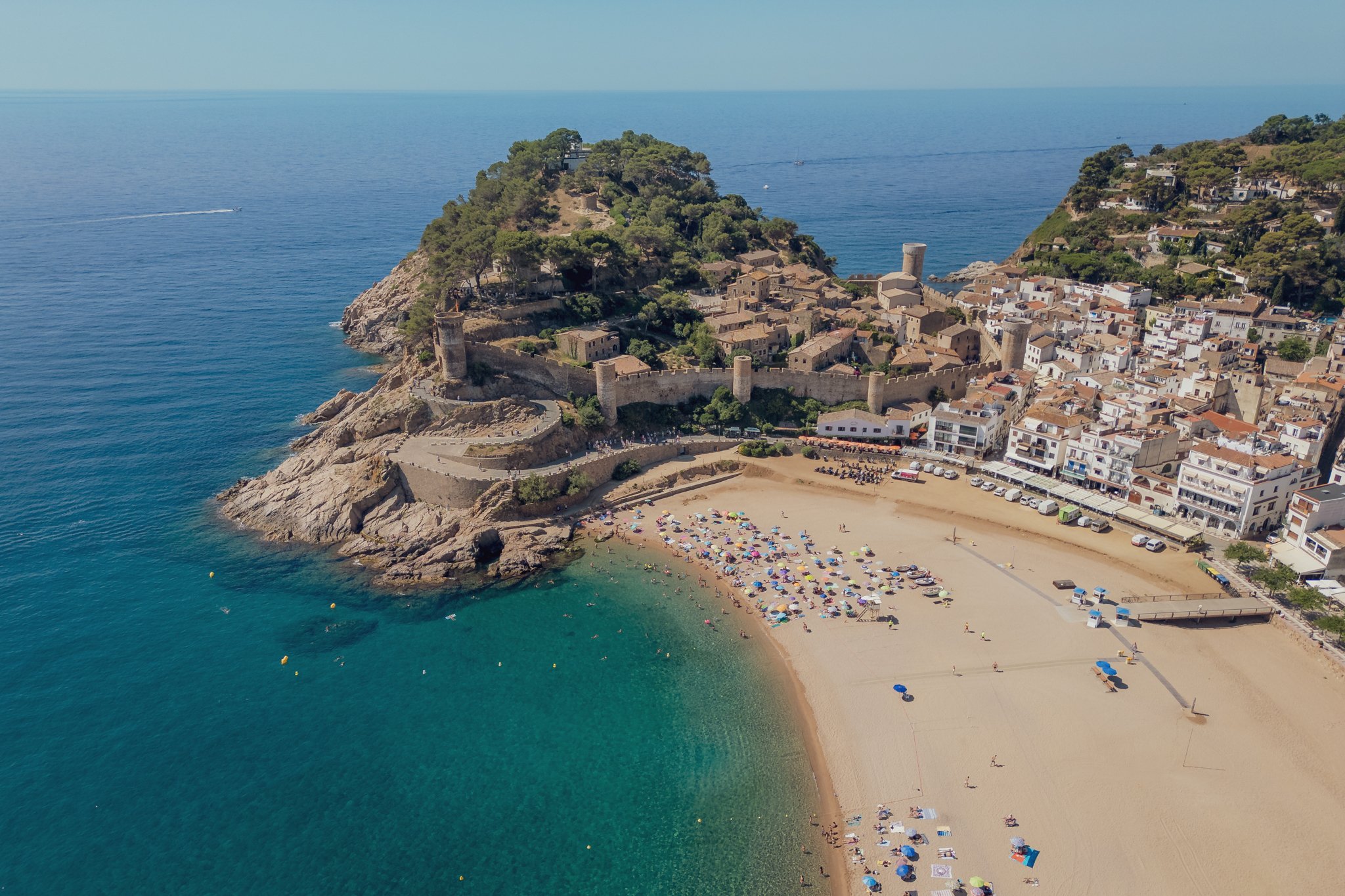
Hidden coves, medieval stone villages, and Dalí’s surreal seaside town – this is the ultimate Costa Brava itinerary for anyone craving Mediterranean magic without the crowds of the Balearics. It’s truly the MOST underrated coastline in Spain!
Let me tell you a secret: Spain’s Costa Brava is one of the most beautiful stretches of coastline in all of Europe, and it still feels like a well-kept secret! I spent five days road-tripping this rugged corner of Catalonia, and it delivered everything I love in a European summer destination – crystal clear, turquoise waters, sunny beaches, charming old European villages and castles, and epic cliff views overlooking the ocean.
If you have been searching for a Costa Brava itinerary that balances beach days, hiking, and charming villages, this is it. I’m sharing exactly where I went, where I parked, what I would do differently, and the mistakes I made so you can skip them (yes, I wore the wrong shoes – more on that later).
Disclaimer: This blog post may contain affiliate links, which means I get a small commission if you click the link and make a purchase – at no extra cost to you! I only share things I genuinely love and think my audience would love too! This is one of the ways I’m able to keep making these free resources and guides for you. Thank you so much for your continued support! Learn more about my affiliate policy here.

What to Know Before Visiting Costa Brava, Spain
Costa Brava is a coastal region in Catalonia, in the northeast corner of Spain, stretching from the town of Blanes up toward the French border. The name translates to “Wild Coast,” and for a good reason! Rocky cliffs plunge into the Mediterranean, and every bend in the road seems to reveal another hidden cove. It is very doable from Barcelona, which is why it is such a fantastic add-on to a longer Spain trip.
☀️ When to Visit Costa Brava
Costa Brava is a summer beach destination, but I’d highly recommend aiming for the shoulder season – late spring or early fall – if you can. Summer brings the warmest swimming weather, but it also brings serious crowds and heat. When I visited, the beach at Cala Sa Tuna was already surprisingly busy at 9:30am, and hiking at Cap de Creus in the heat was no joke. Whenever you go, my top tip is to start your mornings early.
⏳ How Long to Visit Costa Brava
3-5 days is the sweet spot for Costa Brava. I’d recommend 5 days: it gives you time to see the highlights of Tossa de Mar, Begur, and Cadaqués without rushing, and leaves room for slow beach mornings and long dinners. If you have less time, you could condense it to three days, but you would miss some of the quieter coves that make this coastline so special. And you could EASILY spend a full week here and STILL have more to see!
🚗 How to Get to Costa Brava
The easiest way to reach Costa Brava is by car, and I’d highly recommend renting one. Some buses are available connecting the larger towns, but the best beaches, viewpoints, and villages in this itinerary are much easier to reach with your own wheels. Pick up a rental in Barcelona (it’s a 1.5 hour drive from Barcelona to Tossa Del Mar) or a car in Girona and you can be at your first stop in no time.
🚙 How to Get Around Costa Brava
A rental car is truly the best way to get around, especially for the inland villages and remote coves. Just be ready for one big thing: PARKING. It is the biggest challenge of this coastline. Lots at popular beaches fill up by 9 or 10am, some cost quite a bit, and roadside spots are limited. I share exact parking tips for every stop below. The one exception is Cap de Creus Natural Park, where you MUST take the shuttle instead of driving (details on Day 4).
🏨 Where to Stay in Costa Brava
This itinerary uses three home bases to keep your driving minimal: Tossa de Mar for night one, Begur for nights two and three, and Cadaqués for the final stretch. Cadaqués is very small, but it is absolutely the best option because you are so close to everything. If you can’t find a room there, Figueres is a solid backup and is closer to the Dalí museum and the national park.
🗣️ What Language is Spoken in Costa Brava
Catalan and Spanish are both widely spoken. You will hear Catalan on street signs and in local conversation, and you will find English in most tourist spots. Learning a few basic phrases goes a long way, and locals genuinely appreciate the effort!
💶 What is the Currency in Costa Brava
Spain uses the euro (€). Cards are widely accepted, but keep some cash on hand for parking lots, small beach cafes, and the Cap de Creus shuttle.

Day 1: Tossa de Mar: Castle Views, Beaches & a Boat Tour
Tossa de Mar is the perfect welcome to the Costa Brava, with a medieval walled old town, a hilltop castle, and a gorgeous beach all within walking distance of each other. And it’s where I’d 100% recommend if you ONLY had 1 day to do a daytrip from Barcelona!
Start your morning by getting to Platja Gran before the crowds arrive, and head to Cala es Codolar first for a beautiful view of the coastline. Then wander to Plaça d’Armes and Plaça del Pintor, where you can see another stunning view of the castle. If you want even more views, take the short hike for a look back at Cala es Codolar, the small beach on the other side.

After you’ve sweat a bit (the hills by the castle can be humbling) it’s time to cool off at the beach! Parking right at Platja Gran is quite expensive, sadly, but the lot is right there and it fills up, so my top tip is to arrive before 11am. You can rent a chair and umbrella on the sand, which makes for an easy, relaxing morning. Grab a smoothie at By Kalav for a refreshing break, then head to lunch at Restaurant Capri by Josef Pagès – the beachfront views are incredible!
In the afternoon, get out on the water. You can book a boat excursion or opt for kayaking. Another option is a catamaran trip from Lloret de Mar. Seeing these coves from the water is a do not miss, and it gives you a whole new perspective on why this coast is called wild.
Where to stay in Tossa Del Mar
Hotel Delfín is a great central pick. It’s a 2-minute walk from Platja Gran and has private parking, a terrace, and a restaurant. That definitely matters here, since parking near the beach is pricey. There’s also the rooftop pool which is fantastic for cooling off in summer.
Casa Granados Boutique Hotel is the splurge. It’s set in a restored 19th-century mansion in central Tossa de Mar, 492 feet from the beach. It has eight rooms, each with a private terrace and sea views (DREAMY).

Day 2: Cala Pola, Medieval Villages & Begur: Coastal Hikes & Ivy-Covered Streets
Today is a mix of coast and countryside, and it is one of my favorite days of the whole trip! Start with a morning hike along a portion of the Camí de Ronda, the old coastal path that hugs the cliffs. Your goal is the secluded turquoise waters of Cala Pola, or you can head toward Cala Giverola instead. I hiked down from the beach to reach the viewpoint. It is a small hike, and the cove is just about a 15 minute drive from Tossa de Mar.
A quick warning about parking: it is hard here, and you need to be careful about break-ins. If you park in one of the few roadside spots, the downhill walk is steep. I paid for parking at the campsite instead, and I’d highly recommend doing the same. It is around €20 for all-day parking in the camping lot, which you pay at reception. From there it is a mostly flat 10 minute walk down the road to the beach. The campsite also has bathrooms, a small supermarket, and a restaurant, which is super convenient.

After your hike, head inland for the afternoon. First stop is Pals, a beautifully restored Gothic village built entirely of stone. Stroll along Carrer Major and don’t miss the bridge, then visit the castle and the medieval tombs (Sepultures Medievals). The historic center has a photogenic ivy arch, so have your camera ready. You can also see the Muralles de Pals, the town walls.
Drive about 10 minutes further to Peratallada, famous for its defensive moats carved directly out of rock and its ivy-covered alleyways. Wander Carrer de Jaume II for another gorgeous ivy arch, explore the Peratallada historic center, and stop at Guineu de Peratallada. Trust me, you will take a hundred photos here. I was SO surprised that both Pals and Peratallada had hardly any people there, especially compared to the beaches. They are definitely underrated and a great place to escape some of the crowds for a little while.
In the late afternoon, drive to Begur and explore the ruins of the hilltop castle. Check into your hotel, then go for dinner in the historic center. Snag an outdoor table for tapas and local Empordà wine, and toast to a great day!
Where to stay in Begur
Alta House Begur is a good choice if you want to be in the old town (where I’d definitely stay next time!). It has contemporary rooms in the center of the old town near the castle and several restaurants, plus an outdoor pool (great if you’re tired of fighting beach crowds) and a little garden.
Hotel Aigua Blava is THE pick if you want a dreamy coastal setting. It’s a family-owned Costa Brava institution on a clifftop about 10 minutes from Begur’s medieval center, a short stroll from sheltered beaches and swimming spots. You’ll need the car, but it’s a great fit for a Day 3 beach-hopping base.

Day 3: Begur: Hidden Coves & Beach Hopping
Begur is a beach lover’s dream, and today is all about the coves. Get up early, because parking is the name of the game! Start at Cala Sa Tuna, a pristine, pine-shaded cove that is perfect for a morning swim. Be aware that parking is hard, the spot is remote, and it can be very crowded. When I arrived, the beach was surprisingly busy at 9:30am, and the small parking lot was already full. The lot is €9.50 max, but you can pay hourly.
If you want to escape the crowds, hike to Mirador de Sa Tuna and on to Cala s’Eixugador. This is basically a private beach! There were only five people there when I visited, and it was an unforgettable spot.

Other Begur beaches to consider are Platja Fonda, where the parking lot is quite large compared to most but still fills by about 9am, and Platja Aiguablava, which is beautiful but quite busy. El Golfet is a lovely, natural cove, and Port d’Esclanyà has way fewer people because the roads closest to it are private and you need to walk in. Pick one or two, have lunch, and then spend the afternoon at Sa Riera.

For your afternoon, head to Sa Riera beach. I parked at the beach lot and was surprised to find open spaces – it was €3, with a 10 to 15 minute walk to the beach. Don’t skip the Mirador de Sa Riera for the views. You can also walk from Sa Riera to Platja de l’Illa Roja, where the epic rock structure is a real showstopper. Head back into town for dinner, then spend the night in Begur. But if you’d rather be closer to Cadaqués for tomorrow (I’d recommend this!), Figueres is another option – just save some time to drive up in the late afternoon or early evening!

Day 4: Cadaqués: Cap de Creus Natural Park & Whitewashed Beach Town
Today, you are heading to the easternmost point of mainland Spain! Cap de Creus Natural Park is a wild, windswept landscape of otherworldly rock formations. Start early and hike before it gets too hot. It is about an hour from Figueres and under 30 minutes from Cadaques.
The most important thing to know: you MUST take the shuttle. Leave your car at the free El Corral d’en Morell lot and hop on the shuttle, which runs every 30 minutes in peak season for a €7 return ticket. If you drive on the road, you will get a €200 fine! Trust me, take the shuttle.

From the lighthouse, hike to the easternmost point of the Iberian Peninsula (Punt més oriental de la península ibèrica). It is only about 1 mile. If you are feeling ambitious, you can also hike from Cadaqués to the lighthouse, which is about 4 miles point to point. I hiked from the lighthouse toward Cala Jugadora, but it was too hot and I made the rookie mistake of wearing my Tevas. My feet were slipping around on the loose, uneven rocks, so wear sneakers or, even better, hiking boots.
Other ways to explore the park include a boat tour, biking the road, or hiking to Platja Tudela, which is one of the two shuttle stops. There is a cafe at the lighthouse with cold drinks and food, but no bathroom. You can also have lunch at the restaurant at the lighthouse, though you likely need a reservation.

In the afternoon, settle into Cadaqués, this gorgeous fishing village. Spend time on Platja Gran and wander the narrow streets. Have lunch in town if you did not eat at the park, then just enjoy the slow pace. Parking next to downtown is pretty large but expensive and busy, so just be patient! Stay in Cadaqués if you can; it is tiny, but it is the best option, and you will be close to everything for tomorrow.
Where to stay in Cadaqués or Figueres
Hotel Llané Petit (Cadaqués) is a great seaside option. It’s a two-story hotel on a small beach, a 5-minute walk from the town center, with a seasonal outdoor pool and balconies. It’s a lovely spot for a quiet morning before the crowds arrive.
Sercotel President Hotel (Figueres) is the backup if Cadaqués is full, and it makes getting to the 9am Dalí museum slot much easier. It’s in the center of Figueres, about 1,640 feet from the Dalí Museum and 984 feet from Rambla de Figueres.

Day 5: Cadaqués: Dalí, Harbor Views & Paella
Tip: Tickets must be booked weeks in advance, and I’d highly recommend the earliest few slots or the very first slot (for me this was the 9am slot), because the crowds get CRAZY later in the day, but it is not as bad earlier in the day. Allow about two hours – I took 2.5 and could easily have spent more time here!
Parking nearby fills up quickly, and here is a bonus tip: the only bathroom is on the first floor of the museum, and there is none at the end, so use it before you head into the rest of the exhibits. Since the museum is in Figueres, this is much easier if you stay there the night before, or you can build in an early start from Cadaqués.

In the afternoon, head back down to Cadaqués and spend the afternoon exploring or spend your last afternoon relaxing on the beach. I walked over to see and photograph the harbor from the east side, which is SUCH a lovely, postcard-worthy view. Wander through the streets of Cadaqués (I loved finding streets with pink flowers against the white-washed buildings, very Greek island vibes!), and look for Casa Serinyana, a beautiful example of Catalan modernism. You can’t go inside, but the exterior is worth a photo.
End your trip with dinner in Cadaqués – you have to order the paella! It is the perfect way to cap off five days on this stunning coast.

Tips for Visiting Costa Brava
- Arrive early, EVERYWHERE, in summer. From Cala Sa Tuna to Platja Fonda to Cadaqués, lots fill up by 9-11am. Beat the rush and you will have a much more relaxing day.
- Be careful with your car. Break-ins are a real concern at roadside spots near remote coves, so never leave valuables visible. Paying for a campsite or beachfront lot is worth it for peace of mind, especially if you are traveling solo like so many of my Roam Free Fam.
- Hike between beaches on the Cami de Ronda. Skip the parking situation entirely by picking one beach to post up at, then hike to other beaches nearby, so you don’t have to bother moving your car and fighting for parking all over again.
- Bring the right shoes for hiking. Sneakers work, hiking boots are even better, and please learn from my sandal mistake at Cap de Creus.
- Book the Dalí museum weeks ahead. Tickets DO sell out! And choose the first slot of the day to avoid the crowds.
- Take the Cap de Creus shuttle. Skip the €200 fine and use the €7 return shuttle from El Corral d’en Morell.
- Carry some cash. Parking lots, the shuttle, and small spots are easier with a few euros in hand.
- Rent a car and drive up from Barcelona. Some buses run, but a car gives you the freedom to reach these coves and villages.
Read this next!
I hope you enjoy this five-day Costa Brava itinerary! From the castle views of Tossa de Mar to the hidden coves of Begur to the wild beauty of Cap de Creus and Cadaqués, this coastline truly has it all – and it still feels like a secret. If you are looking for an underrated European getaway with beaches, hiking, history, and incredible food, I’d highly recommend adding Costa Brava to your bucket list. Are you planning a trip to Spain? Let me know in the comments which stop you are most excited about!
Plan Your Trip To Costa Brava
🏠️ Accommodation: Use Booking.com for flexible cancellation options and best hotel options for Tossa de Mar, Begur, and Cadaqués.
🚗Car Rental: Book through Discovercars.com for the best rates – I got a car from Barcelona and drove up to Costa Brava, but you could also rent from a smaller town like Girona.
🎫 Activities: Pre-book tours and tickets (especially to the Salvador Dalí Theatre-Museum) online. Always book early so they don’t sell out – I love using GetYourGuide for their 24-hour free cancellation policy.
🌍 Travel Insurance: do not skip travel insurance for Costa Brava – it’s a gorgeous but rugged coastline so I’d highly recommend World Nomads for this adventurous trip.
📱 eSIM: Always stay connected by using an eSIM! You’ll have access to data WITHOUT having to spend a ton on your at-home plan, change your number, or buy a physical sim. My favorites are Airalo for affordable plans (save with my code “REBECCA3” for $3 off your first eSIM) and Holafly for unlimited data (use my code “ROAMFREEREBECCA” to save 5% on any plan!).
Related Adventures
Pin this blog!


More adventures

2 Week New Zealand South Island Itinerary: The Ultimate Road Trip for Adventurers
The ultimate New Zealand South Island itinerary for adventurers – two weeks of epic hikes, jaw-dropping fjords, turquoise lakes, and more waterfalls than you can count.If there's one place on Earth that lives up to ALL the hype, it's the South Island of New Zealand....

Where to Stay in Dublin, Ireland: The Ultimate Neighborhood & Hotel Guide for First Timers
Wondering where to stay in Dublin? Discover the best neighborhoods and my favorite hotels for every budget, plus essential tips for visiting Ireland's capital!Dublin is one of those cities that absolutely enchants you! One minute you're wandering cobblestone lanes...

Hey I’m Rebecca!
I’m a travel & outdoors photographer, blogger, and content greator living in the US but you can find me adventuring around the globe! On this blog I share tips to help you improve your photography, inspiration and advice to explore the outdoors, destination guides, travel tips, and more to plan your own adventures!
Categories
Photography
Destinations
Travel
National Parks
Recent posts

15 Best Places to See Fall Foliage in West Virginia That You Can’t Miss (+ When to Go)
Planning a leaf-peeping trip to West Virginia? Here are the 15 best places to see fall foliage in West Virginia – plus exactly when to go, where to stay and how to get around!I've traveled to nearly 50 countries, and I can tell you with total confidence – fall foliage...
2 Week New Zealand South Island Itinerary: The Ultimate Road Trip for Adventurers
The ultimate New Zealand South Island itinerary for adventurers – two weeks of epic hikes, jaw-dropping fjords, turquoise lakes, and more waterfalls than you can count.If there's one place on Earth that lives up to ALL the hype, it's the South Island of New Zealand....
Where to Stay in Dublin, Ireland: The Ultimate Neighborhood & Hotel Guide for First Timers
Wondering where to stay in Dublin? Discover the best neighborhoods and my favorite hotels for every budget, plus essential tips for visiting Ireland's capital!Dublin is one of those cities that absolutely enchants you! One minute you're wandering cobblestone lanes...


0 Comments